

Welcome to our self-care guide. It’s here to help you find happiness and well-being. We’ll share key self-care rituals to boost your joy and focus on mindfulness.
Studies show self-care is vital for your health. That’s why we’ve created this guide. It’s to kickstart your self-care journey and bring more happiness into your life.
We’ll cover everything from self-care’s power to mindfulness tips. You’ll learn how to put your well-being first. This will help you find happiness through self-care and mindfulness.
Introduction to Self-Care
We aim to show you how self-care, happiness, and well-being are linked. Mindfulness is key to a happier life through simple self-care rituals.
Key Takeaways
- Self-care is crucial for your mental and physical health. It boosts well-being and happiness.
- Mindfulness is a big part of self-care. It helps reduce stress and makes you happier.
- Self-care can greatly improve your life. It leads to more happiness and well-being.
- Simple self-care rituals can change your daily life. They promote mindfulness and well-being.
- By focusing on self-care and mindfulness, you can become happier and healthier. You’ll find a better balance in life.
Understanding the Power of Self-Care in Modern Life
In today’s fast world, self-care importance is huge. With modern life demands, we often forget about our well-being. But, research shows self-care can lower stress and boost mental health, key to happiness science.
By focusing on self-care, we can handle modern life better. This leads to a more fulfilling life. It also makes us happier, creating a more balanced existence.
- Reduced stress and anxiety
- Improved mental health and well-being
- Increased self-awareness and self-acceptance
- Enhanced resilience and coping skills
Adding self-care to our daily lives helps us stay healthy. This is vital in modern life, where work, social media, and other duties can exhaust us.
Exploring self-care, it’s key to know fact from fiction and break down common self-care myths. This way, we understand self-care better and how it fits our unique needs.
| Self-Care Practice | Benefits |
|---|---|
| Meditation | Reduced stress, improved focus |
| Exercise | Improved physical health, increased energy |
| Journaling | Increased self-awareness, improved mental clarity |
Creating Your Morning Ritual for Success
Starting your day with a consistent morning ritual can greatly improve your productivity and well-being. A well-crafted morning ritual can set the tone for the day. It helps you feel mentally clear and sets you up for success.
When creating your morning ritual, consider meditation, journaling, and physical activity. These activities help clear your mind, process thoughts, and boost energy. By focusing on your well-being, you can create a morning ritual that supports your goals.
Here are some tips to help you create a morning ritual that works for you:
- Start small: Begin with a simple routine that you can realistically stick to, such as waking up 15 minutes earlier to meditate or stretch.
- Be consistent: Try to perform your morning ritual at the same time every day, even on weekends.
- Make it enjoyable: Incorporate activities that bring you joy and help you feel relaxed, such as reading or listening to music.
By creating a morning ritual that prioritizes your well-being and supports your goals, you can set yourself up for success. Remember to be patient and flexible. Don’t be afraid to experiment until you find a routine that works for you.
| Morning Ritual Activity | Benefits |
|---|---|
| Meditation | Reduces stress, improves focus |
| Journaling | Clarifies thoughts, boosts creativity |
| Physical Activity | Increases energy, improves mood |
The Essential Self-Care Guide for Mental Well-being
Mental well-being is key to our health. It’s important to make it a priority every day. Mindfulness and stress management help us face life’s ups and downs with ease. Mindfulness means being fully present, noticing our thoughts and feelings without judgment.
Effective mindfulness practices include meditation, deep breathing, and yoga. These can lower stress and anxiety, boost mood, and sharpen focus. Stress management is also vital for mental health. Techniques like exercise, journaling, and nature walks can help.
Practical Tips for Mental Well-being
- Start your day with a mindfulness practice, such as meditation or deep breathing
- Take regular breaks to stretch and move your body
- Practice self-compassion and self-forgiveness
- Connect with nature by spending time outdoors
By adding these practices to our daily routine, we can enhance our mental health and reduce stress. Remember, caring for our mental health is a continuous effort. With the right strategies, we can lead happier, healthier lives.
Building Emotional Resilience
Emotional resilience helps us bounce back from tough times and handle challenges. It’s built through mindfulness, self-care, and staying connected with others. By strengthening emotional resilience, we can manage stress and anxiety better, improving our mental well-being.
Physical Self-Care: Nourishing Your Body
Physical self-care is key for a happy life. A healthy body is the base for joy and fulfillment. By focusing on physical self-care, you can boost your health and energy. Eating right, exercising regularly, and sleeping well are vital for your body’s health.
Some important parts of physical self-care are:
- Eating a variety of whole foods to provide the body with essential nutrients
- Engaging in regular physical activity, such as walking or jogging, to improve cardiovascular health
- Getting enough sleep each night to allow the body to rest and recover
Adding these habits to your daily routine can enhance your physical self-care. The American Heart Association says regular exercise lowers disease risks and boosts health.
Physical self-care also benefits your mind, lowering stress and anxiety and lifting your mood. By making physical self-care a priority, you actively care for your health and well-being.
| Physical Self-Care Activity | Benefits |
|---|---|
| Regular Exercise | Improves cardiovascular health, reduces stress and anxiety |
| Balanced Diet | Provides essential nutrients, supports overall health |
| Adequate Sleep | Allows body to rest and recover, improves mood |
Designing Your Perfect Evening Routine
A good evening routine can really help your sleep, stress, and overall health. It’s key to make a calm space for your body and mind to get ready for sleep. A great routine can make you feel better and ready for tomorrow.
Think about adding sleep habits like avoiding caffeine and screens before bed. A digital detox can also help you relax and recharge. By focusing on your evening routine, you’ll wake up feeling great and ready for the day.
Sleep Hygiene Practices
- Establish a consistent sleep schedule
- Create a relaxing bedtime routine, such as reading or meditation
- Optimize your sleep environment, including temperature and lighting
Digital Detox Strategies
Stepping away from digital devices can help you relax and get ready for sleep. Try a digital detox by avoiding screens for at least an hour before bed. This can lower stress and improve your sleep.
Relaxation Techniques
Adding relaxation methods like deep breathing or yoga can help you relax before bed. By making your evening routine a priority and using these techniques, you’ll feel better and wake up refreshed.
| Evening Routine Activity | Benefits |
|---|---|
| Sleep Hygiene Practices | Improves sleep quality, reduces stress |
| Digital Detox | Reduces screen time, promotes relaxation |
| Relaxation Techniques | Reduces stress, promotes better sleep |
Building Meaningful Social Connections
Social connections are key for our mental and emotional health. Having strong relationships with family, friends, and community members adds joy and support to our lives. In today’s fast world, it’s easy to forget about our social ties. Yet, it’s crucial to make community involvement and nurturing our social connections a priority for a happy life.
Here are some ways to build and keep strong social connections:
- Joining a club or organization that aligns with your interests
- Volunteering for a cause you care about
- Attending community events and gatherings
- Scheduling regular check-ins with friends and family
By focusing on social connections and community, we gain many benefits. These include better mental health, more empathy, and a stronger sense of purpose. As we work to build and keep meaningful social connections, we help create a supportive and caring community. This community encourages growth and well-being.
Remember, making strong social connections takes time and effort. But it’s worth it. By investing in our relationships and community, we can lead a more fulfilling and happy life.
Creating Boundaries for Better Self-Care
Setting boundaries is key for healthy relationships and self-care. Clear personal limits protect your time, energy, and feelings. This helps you build better relationships and focus on yourself.
Creating boundaries can be tough, but it’s vital for your well-being. Here are some tips to start:
- Know your personal limits and tell others clearly
- Practice saying no without guilt or feeling trapped
- Put your needs first and make time for self-care
Healthy boundaries help you save energy and focus on what matters most – your self-care and happiness. Remember, setting boundaries is about being aware and caring for yourself, not being selfish.
Creating and keeping healthy boundaries takes time and effort. Be kind to yourself and ask for help when needed. By focusing on your self-care and setting clear personal limits, you’ll build stronger relationships and a more balanced life.
Incorporating Movement and Exercise
Regular physical activity is key for both body and mind. Adding movement and exercise to your day can greatly boost your health. Try walking, jogging, cycling, or swimming to lower stress and anxiety.
Regular exercise brings many benefits, including:
- Improved mood and energy levels
- Enhanced sleep quality
- Increased strength and flexibility
- Better weight management
To keep physical activity a regular part of your life, find an exercise you love. Join a sports team, take a dance class, or walk with friends. Making movement fun and social helps you stay on track and enjoy its benefits.
Every bit of physical activity matters, and you can start anytime. So, pick an exercise that fits you and make movement a daily priority.
| Activity | Benefits |
|---|---|
| Walking | Improves mood, reduces stress |
| Jogging | Increases energy, enhances sleep |
| Cycling | Improves cardiovascular health, boosts mood |
Mindful Eating and Nutrition Practices
Having a good relationship with food is key for feeling well. Mindful eating helps improve both physical and mental health. Eating a balanced diet is important for energy and mental health.
Nutrition is vital because it feeds our bodies and satisfies hunger. Healthy habits, like regular meals and avoiding too much sugar and salt, are important for health. These habits can lower the risk of chronic diseases and enhance life quality.
Some ways to build healthy eating habits include:
- Eating a variety of fruits and vegetables
- Incorporating whole grains into meals
- Drinking plenty of water throughout the day
By following these tips and practicing mindful eating, we can have a better relationship with food. A well-thought-out meal supports nutrition and reduces the need for unhealthy snacks. This promotes healthy habits.
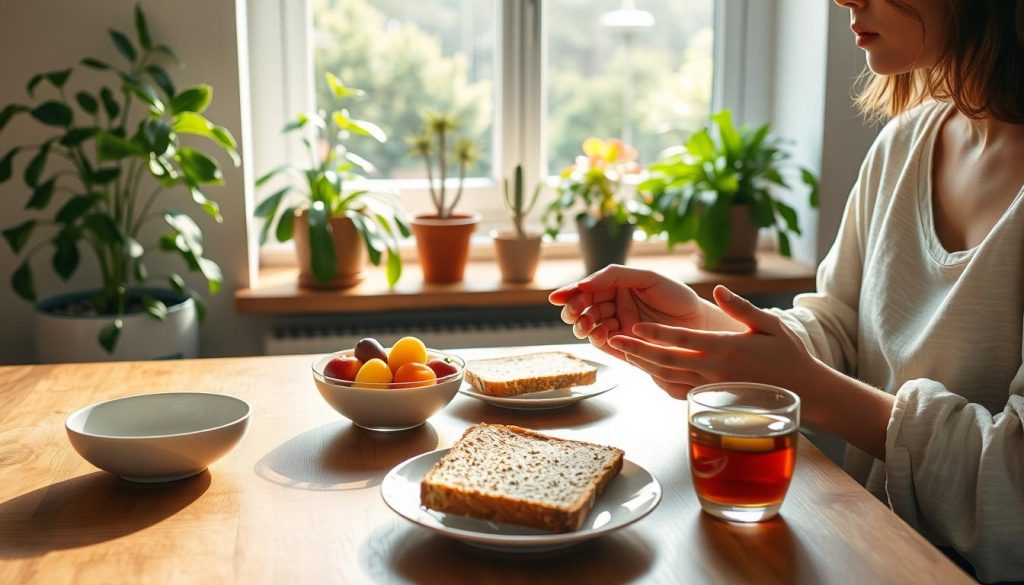
Healthy Eating Habits
Healthy eating habits are crucial for a balanced diet and good health. By focusing on nutrition and mindful eating, we can improve our food relationship and lower disease risks.
Meal Planning for Well-being
Meal planning is vital for healthy eating. It helps ensure we get the nutrients needed for health and well-being. This involves making a weekly meal plan, buying healthy ingredients, and preparing meals ahead of time.
Environmental Self-Care: Creating Your Sanctuary
Our environment greatly affects our mental and physical health. By adding environmental self-care to our daily routine, we can make a sanctuary. This sanctuary helps us relax, feel calm, and be happy.
To make your own sanctuary, follow these tips:
- Surround yourself with nature, whether it’s through plants, a garden, or a peaceful outdoor space.
- Optimize your living and work spaces to promote wellness, such as using calming colors, comfortable furniture, and soothing music.
- Minimize clutter and create a sense of organization to reduce stress and increase productivity.
By focusing on environmental self-care and creating your own sanctuary, you can boost your overall wellness. You’ll also feel more calm and happy every day.
Time Management for Self-Care Success
Effective time management is crucial for self-care and a better work-life balance. It helps you make time for activities that care for your mind, body, and soul. This leads to more self-care success. It’s important to prioritize what’s best for your well-being.
To achieve this, consider these strategies:
- Set clear goals and priorities for your self-care routine
- Use a planner or calendar to schedule self-care activities
- Learn to say no to non-essential commitments that drain your energy
These strategies help you create a routine that supports your self-care goals. Remember, time management is about making choices that align with your values. With good time management and prioritization, you can improve your life quality.
Managing your time and prioritizing self-care takes time and effort. Be patient and kind to yourself. Don’t be afraid to make changes as needed. With practice, you can build a self-care routine that nourishes you, leading to better well-being and success.
Creative Expression as Self-Care
Doing creative things can be a great way to take care of yourself. It lets you express your feelings and grow as a person. Art therapy is a good example of how creative expression can help your mental health.
When you try out different arts, music, or writing, you unlock your imagination. You feel a sense of pride and achievement.
Some good things about creative expression as self-care are:
- It can lower stress and anxiety.
- It can make you feel happier and more well.
- It gives you a break from everyday problems.
- It helps you understand yourself better and grow.
Adding creative expression to your self-care routine can make life more joyful. Whether it’s through art therapy or other creative activities, it’s good for your mind and heart.

By embracing creative expression as a form of self-care, you can cultivate a more positive and resilient mindset, leading to a happier and healthier life.
Financial Self-Care: Managing Money Stress
Financial stress can really hurt your mental health. That’s why financial self-care is key to feeling good. By focusing on budgeting and handling money stress, you can feel less anxious and more financially stable.
To take care of your finances, try these tips:
- Track your spending to see where it goes
- Make a budget for all your needs
- Set goals, like saving for emergencies or paying off debt
Using these methods can help you manage money stress better. Remember, taking care of your finances is vital for your mental and physical health.
It’s important to see financial self-care as more than just managing money. It’s about building a healthy relationship with it. This way, you can lower money stress and boost your overall well-being.
Financial self-care is not a one-time achievement, but a continuous process that requires effort and dedication.
| Financial Self-Care Strategies | Benefits |
|---|---|
| Tracking expenses | Reduced money stress, improved financial stability |
| Creating a budget | Increased financial control, reduced anxiety |
| Setting financial goals | Improved motivation, increased sense of accomplishment |
Conclusion: Embracing Your Self-Care Journey
As we wrap up our self-care journey, remember it’s a lifelong path. Finding well-being and happiness takes time, effort, and trying new things. Everyone is different, so what works for one might not work for another.
We’ve looked at many self-care practices, from starting your day right to managing money. The goal is to pick what feels right for you and make it a regular part of your life. Feel free to try new things and change your routine as you see fit.
Self-care is not selfish; it’s crucial for your health and happiness. Keep moving forward on your self-care journey with kindness and an open mind. Celebrate your wins, be kind to yourself when things get tough, and know your self-care efforts will improve your life in many ways.