

Getting a good night’s sleep is key for your health. It affects how you feel and do things. We’ll share 5 simple tips to help you sleep well tonight and every night.
These tips will make you wake up feeling great. You’ll be ready to tackle the day. We aim to help you sleep better and live a happier life. We’ll talk about why sleep matters and give you easy tips to follow.
Key Takeaways
- Improve your sleep quality for a restful night’s sleep
- Follow 5 practical sleep tips for better sleep
- Enhance your overall health and well-being with good sleep
- Wake up feeling refreshed and rejuvenated
- Achieve better sleep quality with our easy-to-follow sleep tips
Understanding Sleep: Your Body’s Natural Rhythm
Getting a good night’s sleep is key for our health and happiness. Our bodies have an internal clock that controls Sleep Cycles. When this clock gets disrupted, it can cause Sleep Disorders. To sleep better, we need to know how sleep works and make our sleep space relaxing.
Research shows our internal clock is vital for Sleep Cycles. It’s a complex system that uses light and darkness to keep our body in sync with day and night.
The Science of Sleep Cycles
Sleep has different stages, each with its own features. Knowing these stages helps us find and fix sleep problems.
Why Quality Sleep Matters
Good sleep is crucial for our body and mind to heal. It helps our bodies fix tissues, build bones and muscles, and boost our immune system. Bad sleep can cause many health issues, including Sleep Disorders.
Common Sleep Disruptors
Many things can mess up our Sleep Cycles and sleep quality. These include:
- Irregular sleep schedules
- Eating big meals before bed
- Using screens and electronic devices before sleep
- A Sleep Environment that’s not relaxing
By learning about sleep and making our sleep space better, we can sleep better. This helps avoid Sleep Disorders.
Creating the Perfect Sleep Environment
To get a restful night of sleep, you need a sleep-friendly space. Make your bedroom a calm place. A dark, quiet, and cool room helps a lot. Here are some sleep tips for the perfect sleep environment:
- Invest in blackout curtains or blinds to block out any external light
- Use earplugs or a white noise machine to minimize noise pollution
- Keep your bedroom at a cool temperature, between 60-67 degrees Fahrenheit
Also, a comfy mattress and pillows are key. They help with back and neck pain. This lets you sleep better. Follow these sleep tips for a sleep environment that’s relaxing and helps you sleep well.
A well-designed bedroom can improve the quality of your sleep, leading to better physical and mental health. By creating a sleep-friendly environment, you can wake up feeling refreshed, revitalized, and ready to take on the day.
The Impact of Light on Sleep Quality
Light exposure is key to our sleep patterns. Natural light during the day boosts sleep quality. Artificial light, however, can mess with our sleep.
Natural light helps our body’s internal clock, or circadian rhythms. This is vital for a good sleep-wake cycle. Artificial light, like from phones and computers, has more blue light. This can lower melatonin levels and disrupt sleep.
Natural vs Artificial Light
Natural light is crucial for our sleep-wake cycle. It’s good to spend time outside during the day. Artificial light, especially at night, can harm our sleep.
Using soft lighting in the evening helps. It should reduce blue light to help us relax.
Blue Light and Sleep Disruption
Blue light, a high-energy visible light, can lower melatonin levels. This makes it tough to fall asleep. To avoid this, use blue light filtering glasses, apps, or software.
Especially in the evening, these tools can help. They block blue light from screens.
Optimal Bedroom Lighting Solutions
For a great sleep space, use lighting that relaxes and cuts down blue light. Table lamps or floor lamps with warm bulbs are good. Avoid harsh overhead lights.
Blackout curtains also help. They block outside light and improve sleep quality.
| Lighting Solution | Benefits |
|---|---|
| Table lamps or floor lamps with warm-toned light bulbs | Promotes relaxation and reduces blue light emission |
| Avoiding harsh overhead lighting | Reduces glare and promotes a calming atmosphere |
| Using blackout curtains | Blocks out external light and promotes better sleep quality |
Temperature Regulation for Better Sleep
Keeping your bedroom cool is key to better sleep. A cooler room helps you sleep well, making mornings feel fresh. Use a thermostat to keep your room between 60-67 degrees Fahrenheit for the best sleep.
For a sleep-friendly room, make sure it’s well-ventilated. Choose breathable bedding to keep your body cool. This stops you from getting too hot and waking up. Here are some tips for a cooler bedroom:
- Use light, breathable bedding and pajamas to stay cool.
- Keep your bedroom well-ventilated by opening windows or using a fan.
- Avoid using heavy blankets or thick comforters that can trap heat.
By following these tips, you can make your bedroom sleep-friendly. A cooler room is essential for a good night’s sleep. So, control your Sleep Temperature and sleep better tonight.
How to Sleep Better Through Diet Choices
Getting a good night’s sleep is important. Many of us focus on creating a sleep-friendly environment and a calming bedtime routine. But, diet also plays a big role in quality sleep. A balanced Sleep Diet can help your body’s internal clock and improve sleep quality.
Eating Sleep-Friendly Foods can help your sleep. Foods like turkey, chicken, and fish have tryptophan, which relaxes you. Also, eating complex carbs like whole grains, fruits, and veggies boosts serotonin, helping you sleep better.
Foods That Promote Sleep
- Tryptophan-rich foods: turkey, chicken, fish
- Complex carbohydrates: whole grains, fruits, vegetables
- Calcium-rich foods: dairy products, leafy greens
It’s also key to avoid certain foods and drinks before bed. Caffeine, nicotine, and heavy meals can mess with your sleep. Instead, choose light Bedtime Snacks to help you sleep well.
Exercise and Sleep: Finding the Right Balance
Regular exercise can help you sleep better, but when you do it matters. Studies show that exercising at the right time can make your sleep better. This leads to a restful night. It’s key to balance exercise and sleep for your overall health.
Here are some tips for exercise and sleep:
- Regular physical activity can lead to better sleep.
- Avoid intense workouts close to bedtime.
- Try relaxing activities like yoga or stretching before bed.
A restful night is vital for your health. By balancing exercise and sleep, you can enhance your sleep quality. You’ll wake up feeling refreshed and ready to go.
Exercise is a key part of a healthy life and can greatly improve sleep. By adding physical activity to your day and finding the right balance, you can better your sleep and overall health.
Developing a Relaxing Bedtime Routine
A consistent bedtime routine can help you sleep better, studies show. It tells your body it’s time to rest. Adding relaxation techniques to your routine can make your sleep quality better.
Creating a bedtime routine is easy. Start with a regular schedule and a calm environment. Activities like reading, taking a warm bath, or meditating in the evening can help.
Evening Meditation Practices
Meditation is great for calming your mind and body before sleep. Try adding a short meditation to your routine. Focus on deep breathing and being mindful.
Calming Activities Before Bed
There are many ways to relax before bed, besides meditation. Here are a few:
- Listening to soothing music
- Practicing gentle stretches
- Writing in a journal
Setting a Consistent Schedule
Having a regular bedtime schedule is key. Try to go to bed and wake up at the same time every day. This helps your body’s clock and improves sleep quality.
The Role of Stress Management in Sleep Quality
Effective Stress Management is key for a Restful Night‘s sleep. Stress makes our body release hormones like cortisol and adrenaline. These hormones can mess up our Sleep Quality.
Studies show stress can really mess with sleep. It can make it hard to fall asleep, stay asleep, or get good quality sleep.
To handle stress and sleep better, try these tips:
- Use relaxation methods like deep breathing, meditation, or yoga to calm down before bed.
- Do regular exercise to lower stress and anxiety. But, don’t exercise too close to bedtime.
- Stick to a sleep schedule and make your bedroom sleep-friendly. Keep it cool, dark, and quiet.
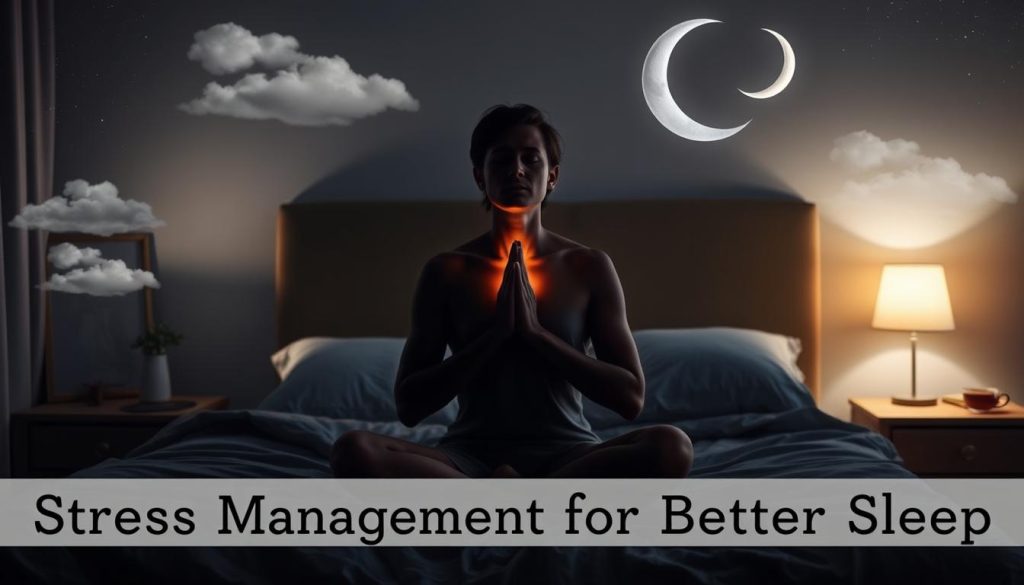
By adding these habits to your day, you can manage stress better. This will help you sleep better, leading to a more Restful Night. Remember, Stress Management is vital for good sleep and health.
Natural Sleep Aids and Supplements
Many people use Natural Sleep Aids and Sleep Supplements to improve their sleep. These can help make sleep better and more relaxing. Research shows that some natural aids can really help with sleep.
Herbal Remedies like valerian root, chamomile, and lavender are popular. You can drink them as teas, take them in capsules, or add them to bath water. Essential Oils for Sleep, like bergamot and sandalwood, can also help relax you.
Herbal Sleep Remedies
- Valerian root: known for its calming effects and ability to improve sleep quality
- Chamomile: a soothing herb that can help reduce stress and anxiety
- Lavender: a calming herb that can promote relaxation and improve sleep
Essential Oils for Sleep
Essential oils can help you relax and sleep better. Bergamot, sandalwood, and ylang-ylang are good choices. Use them in diffusers or apply them to your skin for a good night’s sleep.
Supplement Safety Guidelines
It’s important to be careful with Sleep Supplements. Always talk to a healthcare professional before starting any new supplements. This is especially true if you have health issues or take other medications.
| Supplement | Recommended Dosage | Potential Interactions |
|---|---|---|
| Valerian root | 500-1000mg before bed | May interact with sedatives and antidepressants |
| Melatonin | 0.5-5mg before bed | May interact with blood thinners and diabetes medications |
Optimizing Your Bedroom Setup
Creating a sleep-friendly Bedroom Setup is key for a Restful Night. A well-designed bedroom can help you sleep better, studies show. To make your bedroom sleep-friendly, follow these tips:
Get a comfy mattress and blackout curtains to improve your Sleep Environment. Keep your room tidy and quiet. Here are more tips to make your bedroom better:
- Use calming colors on the walls to promote relaxation
- Invest in a white noise machine to block out any external noise
- Keep the bedroom at a cool temperature to promote better sleep
By following these tips, you can make your bedroom a place for relaxation and better sleep. A well-designed Bedroom Setup is crucial for a Restful Night. It’s important to focus on your Sleep Environment to wake up feeling refreshed.
Managing Sleep During Travel and Time Changes
Traveling to different time zones can be thrilling but also messes with our sleep. Time changes can lower our sleep quality. It’s key to find ways to manage sleep while traveling. Whether for work or fun, good sleep keeps you alert and focused.
Jet lag is a big problem when traveling. To lessen its effects, get your body ready before you leave. Adjust your sleep a few days early, drink lots of water, and eat light meals before bed.
Jet Lag Prevention Strategies
- Gradually adjust your sleep schedule before traveling
- Stay hydrated by drinking plenty of water
- Avoid heavy meals and caffeine before bedtime
Sleep Tips for Different Time Zones
Adjusting to a new time zone’s sleep schedule is crucial. Here are some tips for better sleep in new zones:
- Try to sleep during the local nighttime hours
- Use light therapy to regulate your circadian rhythms
- Avoid napping during the day to prevent disrupting your sleep schedule
By using these tips, you can reduce jet lag and time changes effects on sleep. Remember, good sleep is key for a great trip. Take steps to manage sleep and travel issues for a restful journey.
| Time Zone | Sleep Schedule Adjustment |
|---|---|
| East Coast to West Coast | Delay sleep schedule by 3 hours |
| West Coast to East Coast | Advance sleep schedule by 3 hours |
| Europe to US | Delay sleep schedule by 6-8 hours |
Technology and Sleep: Finding Balance
Too much screen time before bed can mess up sleep patterns. It can also hurt sleep quality. This is because screens give off blue light. This light stops our body from making melatonin, the sleep hormone.
To balance technology use and sleep promotion, create a calm bedtime routine. Activities like reading, meditation, or deep breathing are good. They help your body relax and get ready for sleep.
Here are some tips to cut down screen time before bed and boost sleep quality:
- Set a bedtime schedule and stick to it
- Avoid using electronic devices at least an hour before bedtime
- Use blue light filtering glasses, apps, or software
- Create a relaxing bedtime routine that doesn’t involve screens
Being careful with your technology use and reducing screen time before bed can make your sleep better. You’ll wake up feeling refreshed and ready to go.
Common Sleep Disorders and Warning Signs
Sleep disorders can really hurt your health and happiness. It’s key to spot the signs of sleep issues early. This way, you can get help and sleep better. Sleep problems like insomnia and sleep apnea can hit anyone, no matter their age or health.
Spotting sleep issues is a big step in fixing them. Look out for signs like trouble falling asleep, waking up a lot, and feeling tired all day. If you see these, it might mean you have a sleep disorder.
Recognizing Warning Signs
- Difficulty falling asleep or staying asleep
- Frequent awakenings during the night
- Daytime fatigue or sleepiness
- Difficulty concentrating or paying attention
- Mood disturbances, such as irritability or depression
If you notice these signs, get help right away. A doctor can find and treat sleep disorders. They’ll also teach you how to manage sleep issues and sleep better.
Knowing about sleep disorders and their signs is the first step to better health. It helps you tackle sleep problems and improve your overall well-being.
Creating a Sleep-Friendly Morning Routine
A well-planned Morning Routine can greatly improve your sleep quality. Studies show that a consistent morning routine helps regulate your body’s internal clock. This can lead to better sleep and a more restful night.
To make your morning routine sleep-friendly, follow these tips:
- Set a consistent Wake-Up Time, even on weekends, to help regulate your body’s internal clock.
- Gradually expose yourself to natural light in the morning to help your body wake up.
- Avoid screens and electronic devices at least an hour before waking up to minimize disruption to your sleep.
By adding these tips to your morning routine, you can sleep better and wake up feeling great. Remember, being consistent is important. Try to keep your routine even on weekends or days off. A good morning routine can make a big difference in your sleep and help you start your day positively.
Sleep Hygiene Best Practices
Good sleep hygiene is key to better sleep quality. It means having regular sleep habits and a relaxing environment. By focusing on sleep hygiene, you’ll wake up feeling great and ready for the day.
Daily Habits for Better Sleep
To sleep better, try these daily habits:
- Stick to a consistent sleep schedule, even on weekends
- Avoid caffeine and electronics before bedtime
- Do relaxing activities, like reading or meditation, before sleep
These habits help your body’s clock and improve sleep hygiene.
Weekly Sleep Maintenance Tips
For better sleep, follow these weekly tips:
- Get morning sunlight to set your circadian rhythms
- Avoid naps near bedtime
- Do regular physical activity to relax
Adding these tips to your week can make you wake up feeling refreshed and ready.
Conclusion: Your Path to Better Sleep Starts Tonight
Getting better sleep is possible. By using the tips from this guide, you can improve your sleep quality. You’ll wake up feeling refreshed and ready to go.
Creating a sleep-friendly space and managing stress are key. Healthy habits also play a big role. These small changes can lead to a great night’s sleep.
Your journey to better sleep begins tonight. Pick the tips that fit you best and be patient. As you get used to new habits, your body will start sleeping better naturally.
Sleep is crucial for our health and happiness. By focusing on sleep, you’re investing in your future well-being. Better sleep can improve your focus, mood, and productivity. Start your journey to a better sleep, sleep improvement, and a restful night today.