Keeping your meal prep fresh is key. The right storage methods can cut down on waste and save you time. We’ll look at top food storage tips, including fridge and freezer methods, to keep your meals fresh longer.
Knowing the basics of food storage is vital. With the right tools and methods, your meal prep stays fresh and healthy. Whether you’re busy or love cooking, proper food storage improves your meal quality and safety.
Introduction to Food Storage
Mastering food storage lets you enjoy your meal prep longer and lowers food illness risks. This guide will cover essential food storage hacks. We’ll focus on meal prep, storage, freshness, and shelf life to help you reach your storage goals.
Key Takeaways
- Proper food storage can help extend the shelf life of your meal prep
- Using the right food storage containers can reduce food waste and save time
- Refrigeration and freezing methods can help maintain the freshness of your meal prep
- Understanding the basics of food storage is crucial to keeping your meal prep fresh and healthy
- Mastering the art of food storage can help reduce the risk of foodborne illnesses
- Learning how to store your food properly can make a big difference in the quality and safety of your meals
Understanding Food Storage Basics
Proper food storage is key to keeping your meal prep fresh and safe. Knowing the basics of food storage is important. It helps prevent spoilage and keeps food fresh longer.
Temperature control is crucial in food storage. Bacteria grow fast in temperatures between 40°F and 140°F. Storing food at the right temperature prevents spoilage. Also, managing moisture is important for food shelf life.
The Science Behind Food Spoilage
Food spoilage comes from bacteria, mold, or yeast growth. Knowing this science helps prevent it. Store food in airtight containers and keep them away from sunlight. Also, keep your fridge at a consistent temperature.
Temperature Control Fundamentals
Keeping food at the right temperature stops spoilage. Your fridge should be between 37°F and 40°F. Freezers should be at 0°F or below. This stops bacteria growth and keeps food fresh.
Moisture Management Principles
Managing moisture is vital in food storage. Too much moisture leads to mold and bacteria, causing food to spoil. Store food in airtight containers and avoid sunlight. This keeps food fresh and extends its shelf life.
Essential Food Storage Hacks for Better Meal Prep
When it comes to meal prep, organization is key. It keeps your food fresh and your prep efficient. Use airtight containers, label and date your food, and organize your fridge and freezer.
Good food storage hacks prevent cross-contamination and foodborne illnesses. They also make meal prep easier. Here are some must-haves:
- Using airtight containers to store food
- Labeling and dating stored food
- Organizing your refrigerator and freezer for easy access and visibility
By following these meal prep tips, your food will stay fresh and safe. Always focus on organization and use food storage hacks to streamline your prep.
With these hacks, your meal prep will soar. Enjoy healthy, tasty meals all week.
| Food Storage Hack | Benefits |
|---|---|
| Using airtight containers | Prevents cross-contamination, keeps food fresh |
| Labeling and dating stored food | Ensures easy identification, reduces food waste |
| Organizing refrigerator and freezer | Improves accessibility, reduces meal prep time |
Choosing the Right Storage Containers
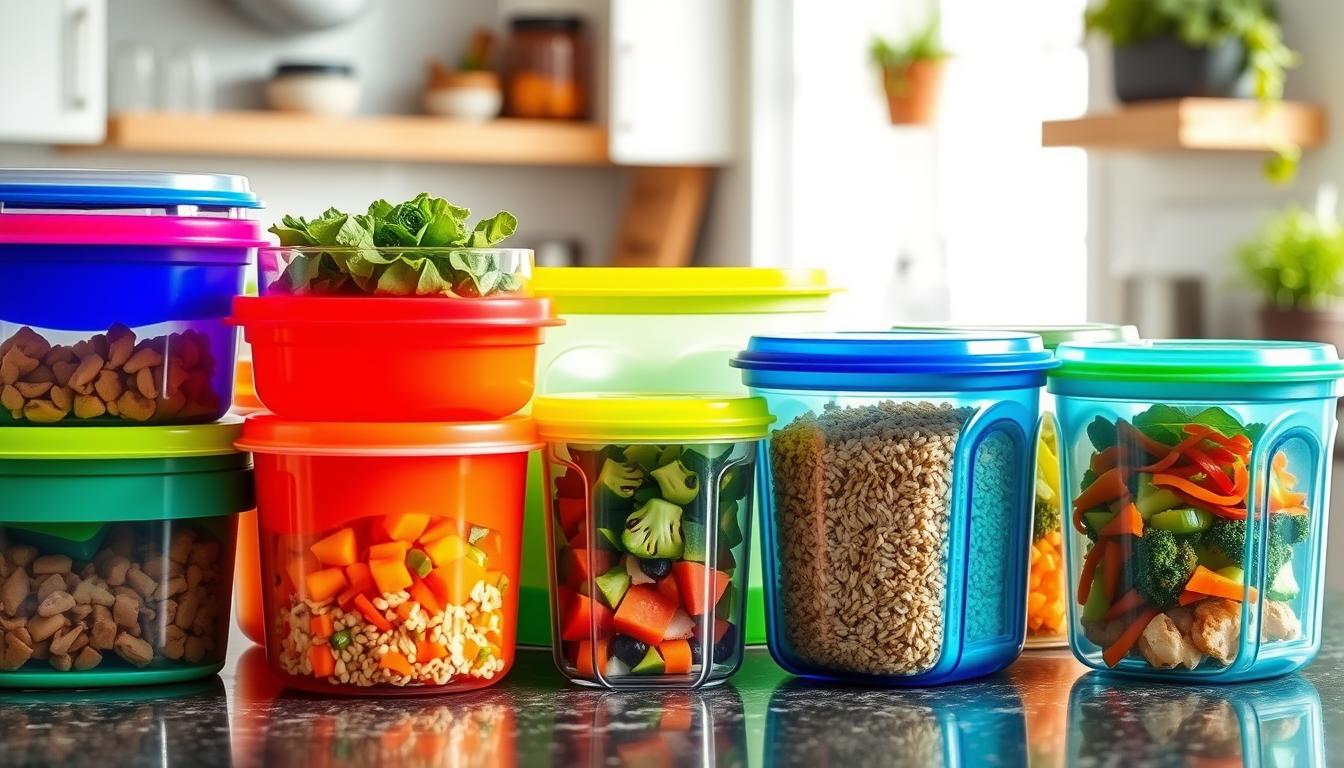
The type of container used for storing food is very important. Storage containers can be made of glass or plastic. Glass containers are often chosen because they don’t let bacteria grow.
Keeping food fresh also depends on airtight sealing. This stops moisture from getting in and spoiling the food. Glass containers with tight seals are great for this, as they keep air and moisture out.
Benefits of Portion-Sized Containers
Portion-sized containers make meal prep easier. They let you reheat and serve food without letting air in. This is good for foods that don’t like changes in temperature or moisture.
Airtight Sealing Solutions
Airtight sealing is key to keeping food fresh. Some containers have built-in seals, while others need separate lids or seals.
Smart Refrigerator Organization Tips
Keeping your fridge organized is key for food safety and longer shelf life. A tidy fridge stops cross-contamination, cuts down on waste, and speeds up meal prep. Store raw meat, poultry, and seafood in sealed containers at the bottom. This keeps them away from foods you eat right away.
Put ready-to-eat foods like fruits and veggies on easy-to-reach shelves. This makes them simple to grab for meals. Always clean and check the expiration dates of your food. These steps help keep your food safe and fresh.
Here are more tips for a smart fridge:
- Store leftovers in airtight containers and mark them with the cooking date
- Put often-used items like condiments and sauces in a special spot
- Use baskets or bins for snacks and dry goods to keep them tidy and out of sight
By using these tips, you can make your fridge more efficient and safe. This helps your food last longer and keeps you from getting sick.
| Food Type | Storage Location | Shelf Life |
|---|---|---|
| Raw Meat | Bottom Shelf | 1-3 days |
| Fruits and Vegetables | Middle Shelf | 3-7 days |
| Leftovers | Top Shelf | 3-5 days |
A well-organized fridge is essential for food safety and longer shelf life. By following these smart tips, you can make your fridge a better place for storing food.
Freezer Storage Techniques That Work
Freezer storage is a great way to keep your food fresh longer. It’s important to know how to set your freezer temperature right. Also, using the right containers is key.
A freezer should be at 0°F or below to stop bacteria growth. Airtight containers prevent freezer burn. This happens when ice crystals damage food due to bad packaging.
Proper Freezer Temperature Settings
Get a freezer thermometer to check your freezer’s temperature. This ensures it stays at the right level. A steady temperature keeps your food fresh and prevents freezer burn.
Best Freezer-Safe Containers
Choose containers that are airtight, moisture-proof, and strong. Glass or plastic containers with tight lids or freezer bags are good choices. They keep your food safe in the freezer.
Preventing Freezer Burn
To avoid freezer burn, remove air from containers or bags before sealing. Vacuum sealers can also help by removing air and keeping moisture out. These steps help keep your food fresh and prevent freezer burn.
| Container Type | Freezer Safety | Airtight |
|---|---|---|
| Glass Containers | Yes | Yes |
| Plastic Containers | Yes | Yes |
| Freezer Bags | Yes | Yes |
Extending Produce Shelf Life
Proper produce storage is key to keeping fruits and veggies fresh longer. Store them in a cool, dry spot, away from sunlight and heat. Some fruits, like apples and bananas, release ethylene gas as they ripen. This gas can make other fruits ripen faster.
To keep your produce fresh, try these tips:
- Store fruits and veggies in separate containers to prevent ethylene gas spread.
- Keep them away from strong-smelling foods, as they can absorb odors easily.
- Check the temperature and humidity in your storage area for the best conditions.
Following these tips can help your produce last longer. Always check your produce before storing it. Remove any spoiled or rotten items to stop mold and bacteria spread.
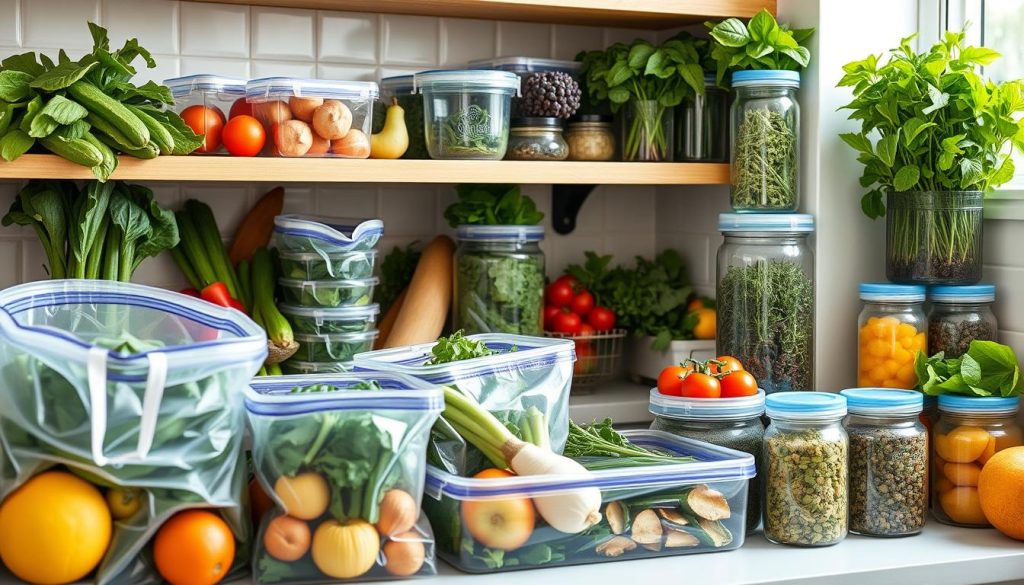
“Proper produce storage is key to maintaining the freshness and quality of your fruits and vegetables.”
By using these simple produce storage tips, you can enjoy your favorite fruits and veggies for longer. This way, you keep them fresh and of good quality.
Protein Storage Solutions
Keeping proteins safe and fresh is key. Different proteins like meat, fish, and plant-based options have unique needs. It’s important to know how to store each type right.
Good storage prevents contamination and spoilage. This keeps your food fresh and healthy. We’ll look at the best ways to store proteins, including meat, fish, and plant-based options.
Meat Storage Guidelines
Meat needs to be in sealed containers at the fridge’s bottom shelf. This stops cross-contamination. Also, keep raw meat away from cooked and ready-to-eat foods.
Fish Preservation Methods
Fish and seafood need special care because they spoil fast. Store them in airtight containers. Keep them cold, at 40°F or below. Freezing is best when you can.
Plant-Based Protein Storage
Plant proteins like tofu and tempeh should be in airtight containers. Keep them cold, at 40°F or below. Always check the expiration dates and store in a cool, dry place.
By using these storage tips, you can keep your meals safe and fresh. This also helps reduce waste and saves time.
| Protein Type | Storage Guidelines |
|---|---|
| Meat | Store in sealed containers at the bottom shelf of the refrigerator |
| Fish and Seafood | Store in airtight containers, keep refrigerated at 40°F or below, and freeze when possible |
| Plant-Based Proteins | Store in airtight containers, keep refrigerated at 40°F or below, and check expiration dates |
Grain and Pasta Storage Strategies
Proper grain storage and pasta storage are key to keeping them fresh. Use airtight containers and store them in a cool, dry spot. Also, protect them from pests and moisture. Regular pantry organization helps stop mold and insects from growing.
Here are some tips for storing grains and pasta:
- Use airtight containers to block moisture and pests
- Store them in a cool, dry area like a pantry or cupboard
- Keep them away from sunlight and heat
- Regularly clean and organize your pantry to stop mold and insects
By following these grain storage and pasta storage tips, you can keep your grains and pasta fresh. This also keeps your pantry organization in order. It helps prevent mold and insects from ruining your stored food.
Remember, the right storage is crucial for keeping grains and pasta fresh. Use airtight containers, store them in a cool, dry place, and protect them from pests and moisture. This way, you can enjoy your favorite grains and pasta for longer.
Proper Storage of Prepared Meals
Storing prepared meals safely is key to keeping food fresh and preventing illness. It’s important to cool hot food quickly and use layering to keep it fresh. Also, follow reheating guidelines to avoid foodborne illnesses.
Handling prepared meals with care is crucial to stop bacteria growth. Cooling hot food fast is a must to prevent harmful bacteria. Layering helps keep moisture in and bacteria out. For example, rice or grains at the bottom can absorb moisture.
Reheating guidelines are also important for food safety. Heat food to at least 165°F to ensure it’s safe to eat. This rule applies to all prepared meals, including leftovers. Here are some reheating tips:
- Use a food thermometer to check the temperature.
- Avoid overcrowding to ensure even heating.
- Stir the food often to avoid hot spots.
By following these tips, you can safely store and enjoy your prepared meals for longer. Always prioritize food safety and handle your meals with care to prevent illness.
Preventing Cross-Contamination
Keeping your kitchen clean is key to food safety and hygiene. It’s important to keep raw, cooked, and ready-to-eat foods separate. This stops bacteria and germs from spreading. Use different cutting boards and utensils for raw meats and veggies.
Washing your hands and kitchen surfaces often is also crucial. Make sure to use soap and warm water. Labeling and dating foods helps too. It ensures you eat the oldest food first, which lowers the risk of getting sick.
- Separate raw, cooked, and ready-to-eat foods
- Use separate cutting boards and utensils for raw meats and vegetables
- Regularly wash hands and surfaces with soap and warm water
- Properly label and date stored foods
By taking these steps, you can keep your kitchen clean and safe. This helps avoid foodborne illnesses. It ensures food safety and
Natural Preservation Methods
Natural preservation methods are a healthier choice compared to chemical preservatives. They let people enjoy their favorite foods without losing their nutritional value. Vinegar is a key player in preserving foods like pickled vegetables and meats.
Herbs and spices also have a big role in preserving food naturally. They have antimicrobial properties that help keep food fresh longer. For instance, garlic fights bacteria, and cinnamon stops mold and yeast from growing.
Vinegar-Based Solutions
Vinegar-based solutions are a favorite for pickling vegetables and meats. The vinegar’s acidity makes it hard for bacteria and other microorganisms to grow. This helps keep the food fresh.
Herb and Spice Preservation
Herbs and spices can preserve food in many ways. They can be added during cooking or used in marinades. Garlic, cinnamon, and rosemary are some of the best for keeping food fresh.
Using natural methods like vinegar, herbs, and spices lets people enjoy their favorite foods. They keep the nutritional value and avoid chemical preservatives.
Technology-Based Storage Solutions
Using technology in food storage has changed how we keep our meals fresh. Now, we have smart tools like refrigerators with temperature control, vacuum sealers, and dehydrators. These tools help keep food fresh for longer.
Some big advantages of these technology-based storage solutions are:
- Less food waste because food lasts longer
- Food stays safer from spoilage and contamination
- It’s easier to manage with automated controls
These storage solutions help us eat healthier and reduce waste. As we keep improving technology for food preservation, we’ll find even better ways to store food.
Companies like Samsung and LG are adding cool features to their fridges. They have apps for grocery lists and meal planning. These features make storing food easier and help us avoid buying too much.
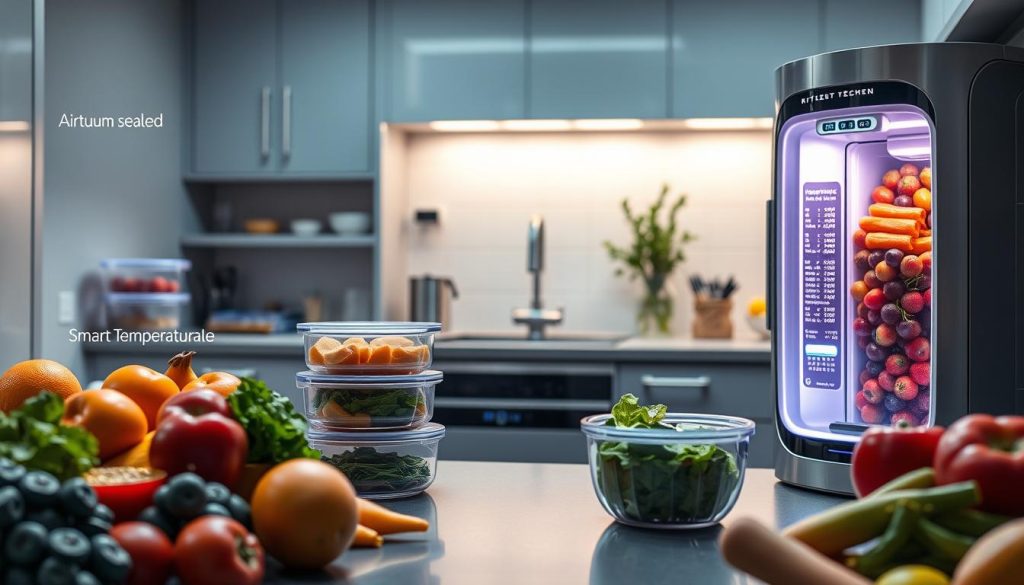
The future of technology in food storage is exciting. With the right tools and a focus on innovation, we can make our food system more sustainable and secure for all.
Common Food Storage Mistakes to Avoid
Food storage mistakes can spoil or contaminate food, harming our health. It’s key to know common errors like temperature control mistakes, container selection errors, and forgetting to date and label foods.
Common mistakes include storing perishable foods at room temperature. Also, using the wrong containers and not labeling foods can cause rapid spoilage. These errors can lead to foodborne illnesses, so it’s important to be careful.
Temperature Control Errors
Keeping perishable foods at the right temperature is crucial. Storing them at room temperature can cause bacterial growth and spoilage. Always use refrigerators and freezers to store foods correctly.
Container Selection Mistakes
Choosing the right container selection is vital. Containers that are not airtight or moisture-proof can lead to contamination. Use containers made for food storage, like glass or plastic with tight lids.
Dating and Labeling Oversights
Not dating and labeling foods can lead to eating spoiled or expired items. This can be harmful to our health. Always date and label foods, including the storage date and what’s inside.
Avoiding these common food storage mistakes helps keep our food safe and fresh longer. This includes avoiding temperature control errors, container selection mistakes, and forgetting to date and label foods.
| Food Storage Mistake | Consequence |
|---|---|
| Temperature control errors | Rapid spoilage and foodborne illnesses |
| Container selection mistakes | Contamination and spoilage |
| Dating and labeling oversights | Consuming spoiled or expired items |
Emergency Food Storage Tips
Being prepared is crucial for emergency food storage. You need a plan for disaster preparedness. This includes storing non-perishable foods and knowing how to cook safely during emergencies. Food safety is very important. Regularly check expiration dates and rotate stored foods to keep your emergency food safe and edible.
A good emergency food storage should have at least three days’ worth of non-perishable foods. You’ll also need a manual can opener and a plan for safe food handling and cooking. Important items include:
- Non-perishable foods like canned goods, dried fruits and nuts, and energy bars
- A manual can opener and other essential kitchen tools
- A plan for safe food handling and cooking, including clean water and a cooking method
Having a plan for emergency food storage and disaster preparedness keeps you and your loved ones safe. Always remember to prioritize food safety
Storing non-perishable foods is just the start. You also need a plan for regular checks on expiration dates and food rotation. This ensures your emergency food stays safe and edible. By following these tips and focusing on emergency food storage and disaster preparedness, you can keep yourself and your loved ones safe and healthy.
Conclusion: Maximizing Your Meal Prep Success
To achieve long-term meal prep success, you need a smart plan for storing and organizing food. This guide offers practical tips to help you keep your meals fresh longer. It also helps you avoid wasting food and stay healthy.
It’s important to regularly check and update your meal prep methods. This way, you can find and fix any problems. With the right storage and organization, your meal prep will get better, and you’ll enjoy a well-organized kitchen.
Success in meal prep comes from always learning and being open to change. Keep exploring new ways to store food and enjoy the process. This will lead to a more organized, efficient, and tasty meal prep experience.