Welcome to our guide on creating a Work-from-Home Setup that boosts your productivity and comfort. With the rise of remote work, it’s essential to design a Productive Space that meets your needs and helps you stay focused.
A well-designed Work-from-Home Setup can make all the difference in your work performance and overall well-being. In this article, we’ll explore the key elements of a Productive Space. We’ll cover choosing the perfect location, selecting the right furniture, and the technology for your Work-from-Home Setup.
Introduction to Productive Space
Whether you’re a freelancer, entrepreneur, or employee, our expert-approved tips will help you create a workspace. This workspace will inspire creativity and efficiency in your Work-from-Home Setup and Productive Space.
Key Takeaways
- Designing a Productive Space can improve your work performance
- A well-planned Work-from-Home Setup can boost your comfort and productivity
- Choosing the right furniture and technology is essential for a Productive Space
- A Work-from-Home Setup should meet your specific needs and work style
- Creativity and efficiency can be inspired by a well-designed Productive Space
Creating Your Ideal Work-from-Home Setup
To make a productive Home Office, first check your space and what you need to work. Think about your job, the tools you need, and how long you’ll work there. Measure your area and plan how to make it comfy and useful for work.
When setting up your dream space, remember a few important things:
- Available space: Look at your room’s size and layout.
- Work requirements: Think about your job and the tools you need.
- Budget: Set a budget for your Home Office setup.
By thinking about these, you can make a Workspace that fits your needs. A well-planned Home Office can really improve your work life and job happiness.
Your Home Office should inspire you to work well. By putting effort into your setup, you can balance work and life better. This will help you be more productive overall.
Choosing the Perfect Location in Your Home
Creating a Productive Space starts with picking the right spot for your home office. The location greatly affects your productivity and comfort. Think about natural light, noise levels, and how close it is to important areas.
Here are some important things to think about:
- Natural light: A bright space can lift your mood and energy.
- Noise levels: A quiet spot helps you focus better.
- Proximity to amenities: Being near a kitchen or bathroom is handy but can also be distracting.
A good Home Office Location is quiet, bright, and free from distractions. Don’t put your office where it’s busy or noisy. This way, you’ll have a peaceful and productive Productive Space.
Finding the best Home Office Location means thinking about what you need. Look at your space and decide what works best for you. With some planning, you can make a Productive Space that helps you stay on track and reach your goals.
Essential Furniture for Your Home Office
Setting up a home office right is key for comfort and productivity. Ergonomic Furniture is essential for long work hours. A well-designed home office with Home Office Furniture greatly improves your work experience.
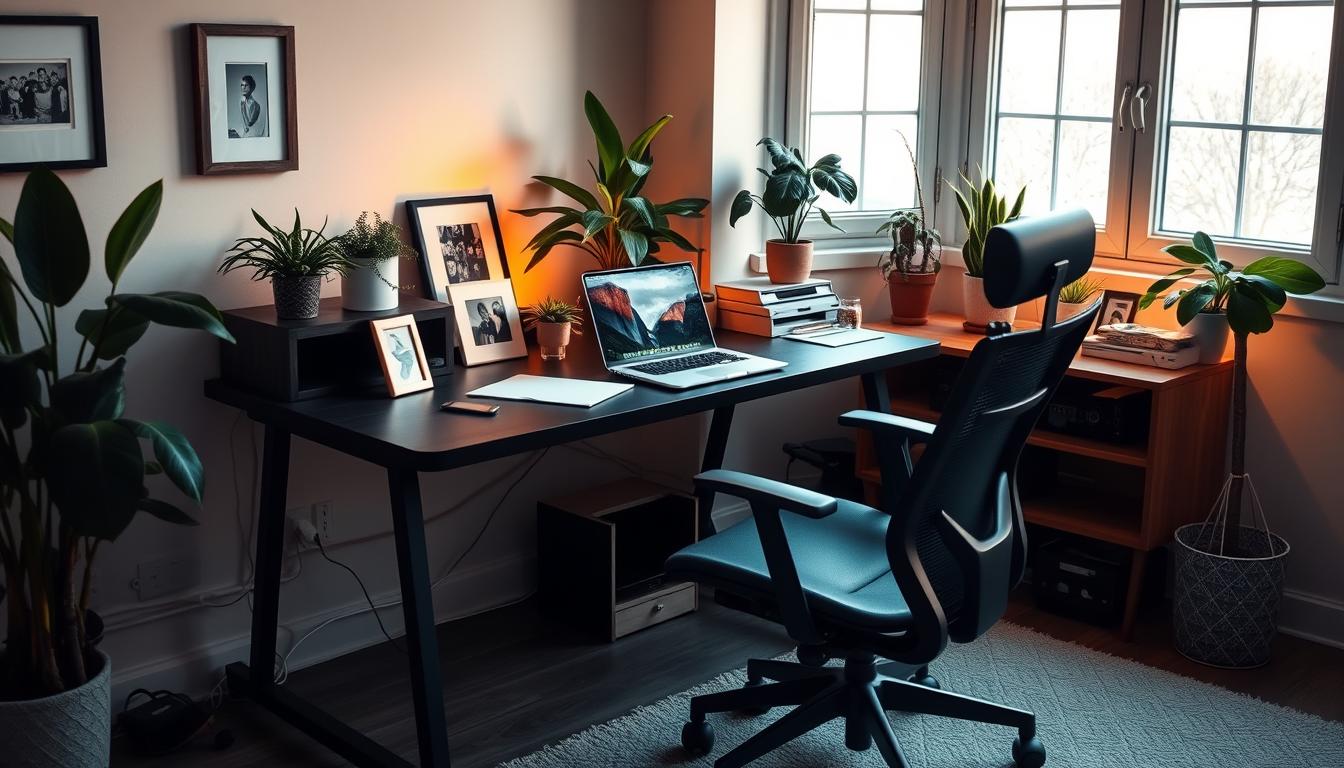
Start with the must-have furniture for your home office. This includes an ergonomic chair, a sturdy desk, and enough storage. An ergonomic chair supports your back and legs. A good desk keeps you organized and focused.
- Comfort: Choose furniture that’s ergonomic and adjustable for comfort.
- Space: Pick furniture that fits your office well, leaving room to move.
- Style: Select furniture that matches your style and office look.
Investing in the right Ergonomic Furniture and Home Office Furniture makes your workspace productive and comfy. It meets your needs and helps you reach your goals.
| Furniture | Benefits |
|---|---|
| Ergonomic Chair | Provides support and comfort for long hours of work |
| Sturdy Desk | Helps stay organized and focused |
| Storage Solutions | Keeps office supplies and documents within easy reach |
Lighting Strategies for Productivity
When designing a Productive Space, think about how lighting affects your mood and energy. Good Lighting Strategies can greatly improve your workspace. Mix natural and artificial light for the best balance.
Place your desk near a window for natural light. A good desk lamp can also help, reducing eye strain. Stay away from harsh overhead lights, as they can hurt your productivity and mood.
Some important Lighting Strategies to keep in mind are:
- Use both natural and artificial light
- Put your desk near a window
- Get a quality desk lamp
- Avoid harsh overhead lights
By using these Lighting Strategies, you can make a Productive Space
| Lighting Type | Benefits |
|---|---|
| Natural Light | Improves mood, energy levels, and productivity |
| Artificial Light | Provides focused lighting, reducing eye strain and discomfort |
Tech Equipment Essentials
Setting up a home office means getting the right tech gear. You need a reliable computer, top-notch peripherals, and fast internet. With these, you’ll work better and reach your goals faster.
In today’s world, having the right tech is key. You’ll need a good keyboard, mouse, and monitor. Also, make sure you have a stable internet and a backup power source. This makes your home office both useful and comfy.
- Computer setup recommendations: Research different options to find the one that suits your needs
- Peripheral devices: Invest in a good keyboard, mouse, and monitor
- Connectivity requirements: Ensure a stable internet connection and backup power source
Investing in the right tech and home office tech makes your work space better. It helps you meet your career goals.
| Tech Equipment | Importance |
|---|---|
| Computer | High |
| Peripheral devices | Medium |
| Internet connection | High |
Focus on your tech needs and get the right gear. This way, you’ll have a smooth and productive work experience. It will help you succeed in your career.
Ergonomic Considerations
When setting up your home office, think about Ergonomic Considerations for a comfy and healthy space. Make sure your chair, desk, and monitor are at the right heights. A well-planned workspace can lower injury risks and boost your productivity.
Important Home Office Ergonomics factors include:
- Chair height and position
- Desk height and position
- Monitor position and distance
- Keyboard and mouse placement
Adding a document holder and using a standing desk can also help. These choices support Ergonomic Considerations. By focusing on Home Office Ergonomics, you make a space that’s good for your body and mind.
By adding these Ergonomic Considerations to your home office, you make a space that’s both comfy and productive. This lets you work well and efficiently.
| Ergonomic Element | Benefits |
|---|---|
| Comfortable chair | Reduces back and neck pain |
| Proper monitor position | Reduces eye strain and headaches |
| Standing desk or sit-stand workstation | Improves posture and reduces sedentary behavior |
Creating a Professional Background
Remote work means you need to make a good impression. A high-quality webcam and microphone are key for clear communication. A well-designed Video Call Setup is vital for looking professional.
Think about the lighting and noise in your workspace. Natural light is best, but a good light source is necessary. A plain colored background or a professional backdrop adds polish. These details make your Video Call Setup better and boost your confidence.
For a great Video Call Setup, position your webcam at eye level. Use a headset or earbuds to cut down echo. Choose a quiet, private spot for calls. Quality equipment and these tips will help you succeed in remote work.
Video Call Setup Tips
- Use a high-quality webcam and microphone
- Position your webcam at eye level
- Choose a quiet and private space for calls
Background Design Elements
When designing your Professional Background, think about what will be seen during calls. A plain colored wall or a professional backdrop is good. Adding plants or art can make your space welcoming and professional.
Organization and Storage Solutions
Creating a productive work-from-home setup starts with organization. A messy workspace can hurt your productivity and focus. Using storage solutions like a file cabinet, desk organizer, and shelving unit helps keep things tidy.
To keep your space clean, set up a regular cleaning schedule. Use labels and categories for your documents and supplies. This makes finding what you need easier and reduces stress, helping you stay focused.
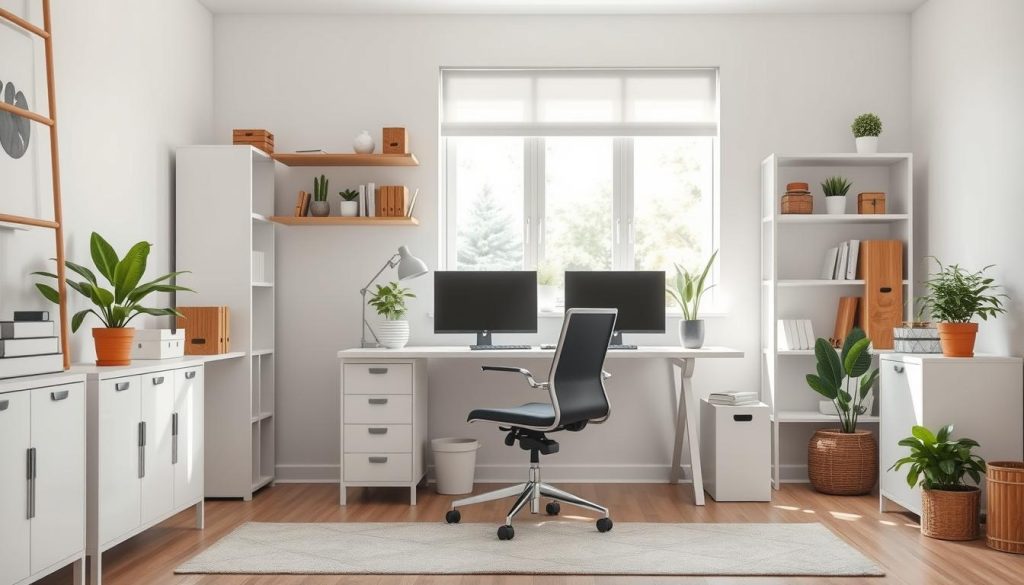
- Designate a specific area for paperwork and documents
- Use a desk organizer to keep office supplies within reach
- Invest in a shelving unit to store books, binders, and other office materials
By using these storage solutions and organization tips, you can make a productive work-from-home space. It helps you stay focused and reach your goals.
| Storage Solution | Benefits |
|---|---|
| File Cabinet | Keeps documents organized and secure |
| Desk Organizer | Keeps office supplies within reach |
| Shelving Unit | Provides additional storage for books, binders, and other office materials |
Managing Noise and Distractions
To make a Productive Space, you need to think about your environment. One key thing is Noise Reduction. Too much noise can make it hard to focus and work well. It’s important to find out where the noise is coming from and how to lessen it.
There are a few good ways to cut down on noise. You can use sound-proofing materials, noise-canceling headphones, or a white noise machine. Adding these to your workspace can make it quieter and more focused. Here are some tips to make your space better:
- Use acoustic panels to absorb sound and reduce echo
- Invest in a good pair of noise-canceling headphones
- Utilize a white noise machine to create a constant, soothing sound
By using these methods, you can handle noise and distractions better. This will help you make a Productive Space where you can work well and reach your goals.
| Noise Reduction Strategy | Effectiveness | Cost |
|---|---|---|
| Sound-proofing materials | High | Medium to High |
| Noise-canceling headphones | High | Medium |
| White noise machine | Medium | Low to Medium |
Incorporating Natural Elements
To make a Productive Space, adding Natural Elements is key. Plants, a water feature, or a natural fiber rug can change your mood and work style. They purify the air, lower stress, and make your space calm. This turns your workspace into a place for focus and creativity.
Here are some ways to add Natural Elements to your workspace:
- Adding plants like snake plants or spider plants that clean the air
- Installing a small water feature, like a fountain or a waterfall
- Using natural fiber rugs, such as jute or sisal, for warmth and texture
By adding these Natural Elements, you’ll make a Productive Space that boosts your work and well-being. Working in this space, you’ll feel closer to nature and more focused. This leads to a better balance between work and life.
Remember, adding Natural Elements is about making a space that cares for your body and mind. This way, you’ll work better, think clearer, and feel more complete in your Productive Space.
| Natural Element | Benefits |
|---|---|
| Plants | Air purification, stress reduction, improved mood |
| Water feature | Calmness, focus, improved concentration |
| Natural fiber rug | Warmth, texture, improved air quality |
Temperature and Ventilation Control
Creating a comfortable and healthy workspace is key for productivity and well-being. Temperature Control and Ventilation are often overlooked. A well-ventilated space can improve air quality, reducing respiratory risks and boosting health.
Effective Temperature Control is also crucial. It affects focus and energy. A space that’s too hot or cold can be distracting. Using a thermostat or climate control system can keep the temperature right, making work more productive.
Air Quality Management
Air quality is closely tied to Ventilation. Poor air quality can cause health issues like headaches and respiratory problems. To improve air quality, consider air purifiers or dehumidifiers. These devices remove pollutants and excess moisture, making the workspace healthier.
Climate Control Solutions
There are many Climate Control Solutions, from simple fans to complex HVAC systems. When choosing, think about energy efficiency, noise level, and maintenance. Some popular options include:
- Inverter-based air conditioners for efficient cooling
- Heat recovery ventilation systems for better air quality
- Smart thermostats for automated Temperature Control
By using effective Temperature Control and Ventilation, you can make your workspace comfortable and healthy. This promotes productivity and well-being. Research and invest in solutions that fit your needs. Don’t hesitate to seek professional advice if needed.
Personal Touches and Inspiration
Adding personal touches to your workspace can make it feel more welcoming and motivating. Think about adding family photos, artwork, or inspirational quotes. These elements can give you a much-needed boost of motivation and inspiration.
A well-designed workspace with personal touches can also boost creativity and job satisfaction. By adding things that show your personality and interests, you can make a space that feels truly yours. This inspiration can help drive your success.
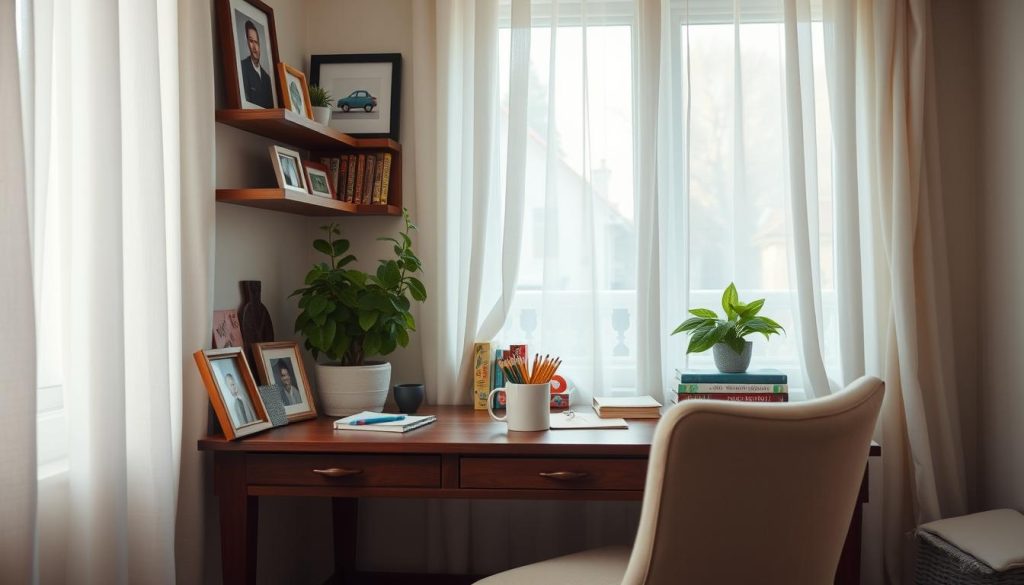
- Displaying family photos or mementos
- Creating a vision board or inspirational quote display
- Incorporating plants or other natural elements
By adding these personal touches and seeking inspiration from your surroundings, you can make a workspace that is both functional and fulfilling.
Maintaining Work-Life Balance in Your Space
Creating a workspace that supports balance and well-being is key for a healthy work-life balance. Working from home can blur the lines between work and personal life. Setting up clear boundaries between your work and personal spaces helps achieve balance.
Good time management is also vital for a healthy work-life balance. Techniques like the Pomodoro Technique, which involves 25 minutes of focused work followed by a five-minute break, can keep you on track. Remember to schedule breaks and make time for self-care to maintain balance.
- Set clear boundaries between work and personal time
- Make self-care a priority, like exercise or meditation
- Stick to a routine
- Don’t let work creep into personal time
By using these strategies, you can boost your well-being and productivity. Remember, finding a balance between work and personal life is an ongoing effort. It’s crucial for your physical and mental health.
| Time Management Strategy | Description |
|---|---|
| Pomodoro Technique | Work in focused 25-minute increments, followed by a five-minute break |
| Scheduling Breaks | Take regular breaks to rest and recharge |
| Self-Care Activities | Prioritize activities that promote physical and mental well-being, such as exercise or meditation |
Adapting Your Setup for Different Seasons
To keep your Productive Space in top shape, you need to change your setup with the seasons. As the weather changes, your workspace might need to adjust for better lighting, temperature, and less noise. Think about adding seasonal decorations to make your space feel cozy, or tweak your lighting for the best light.
A smart Seasonal Setup can really boost your work life. Here are some tips to make your workspace comfy and efficient all year:
- Change your lighting to match the daylight hours
- Use a heater or fan to keep the room just right
- Add seasonal decorations to make your space inviting
By changing your setup with the seasons, you’ll keep your workspace comfy and Productive Space all year. This helps you stay on track and motivated, leading to more work done and better results. Always check your workspace and tweak it as needed to keep it working for you and your goals.
Budget-Friendly Setup Solutions
Setting up a productive workspace doesn’t have to cost a lot. You can find affordable ways to create a great space. Think about DIY projects like making a standing desk or organizing your home office. These can be done with little money and add a personal touch.
Some great DIY projects include:
- Turning old furniture into a unique desk or storage unit
- Building a standing desk from reclaimed wood or cheap materials
- Making a home office organizer from old containers or shelves
Another way is to find cheaper alternatives to expensive office furniture. Look for second-hand items or online deals. This way, you can have a great workspace without spending too much.
DIY projects require creativity and resourcefulness. With some patience and effort, you can make a space that’s both functional and stylish. Whether it’s a standing desk or an organizer, there are many DIY options. By trying these, you can make a workspace that’s both productive and affordable.
| DIY Project | Cost | Time Required |
|---|---|---|
| Building a standing desk | $50-$100 | 2-3 hours |
| Creating a home office organizer | $20-$50 | 1-2 hours |
| Upcycling old furniture | $0-$20 | 1-2 hours |
By looking into budget-friendly options and DIY projects, you can make a workspace that’s both productive and comfortable. With a bit of creativity and resourcefulness, you can achieve a great setup without spending a lot.
Conclusion: Making Your Work-from-Home Setup Work for You
Creating the ideal work-from-home setup takes careful planning. But the benefits are huge. By focusing on ergonomics, reducing distractions, and adding personal touches, you can make a space that boosts your productivity and inspires you. Your work-from-home setup reflects your professional identity. So, it’s key to design a productive space that helps you excel.
Be ready to change your setup as your needs change. Keep checking your space, listen to feedback, and try new ideas. With creativity and a focus on your well-being, you can turn your home into a haven of productivity and success.